ivygo: Unlocking Monetisation, Reducing Risk & Enhancing Trust
UX Research
Web Application
Project Overview
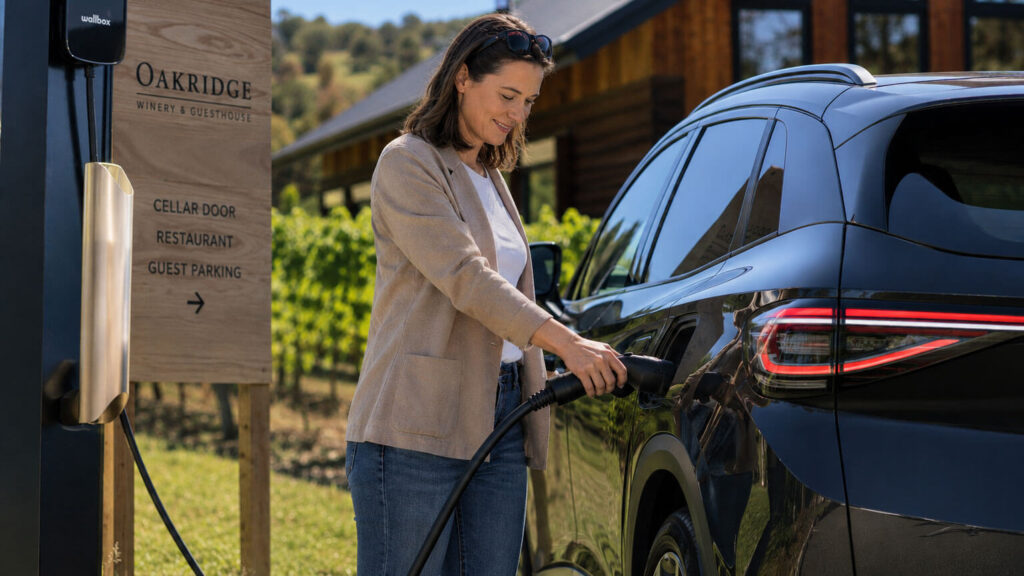
ivygo is a smart app and B2C website designed to connect electric car (EV) drivers with charging stations hosted by local small businesses. While the app manages bookings and payments seamlessly in the background, many hospitality property hosts are completely frozen when it comes to turning their chargers into active revenue streams. This case study breaks down how we discovered why these chargers sit empty and how we re-designed the product to confidently move business owners from total hesitation to full financial control.
Timeframe
12 weeks
My Role
UX/UI Specialist & Product Strategy Lead
Tools
Miro, Google Docs, Zoom
The Challenge
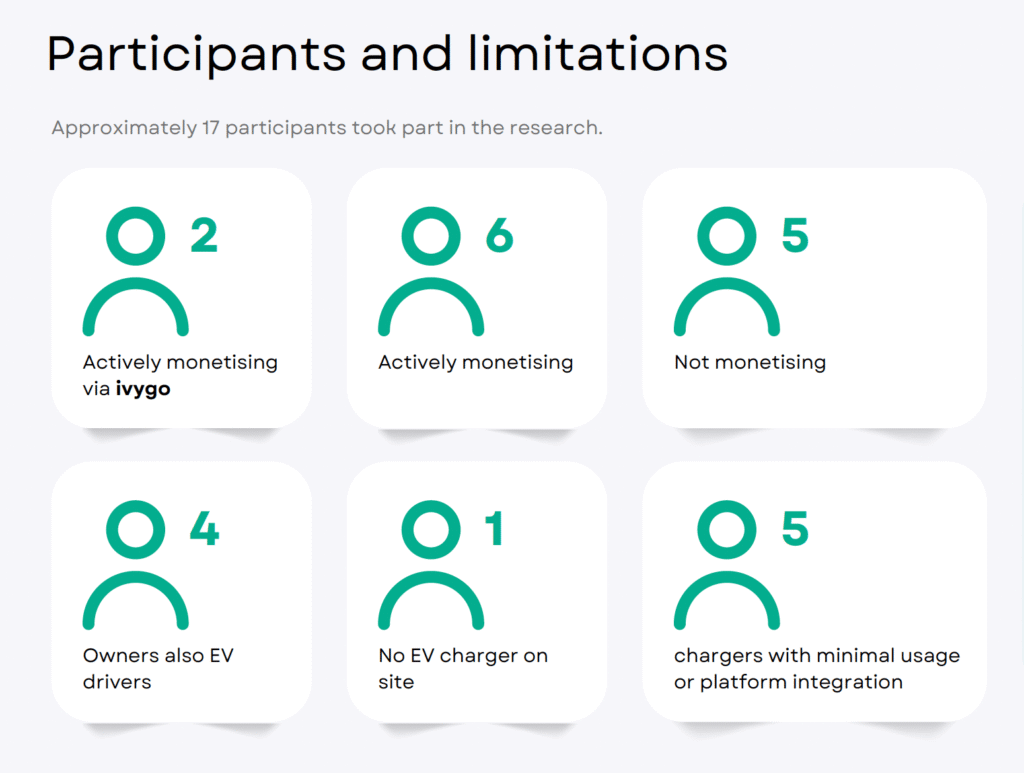
17 In-Depth Interviews conducted directly with small business owners and regional EV drivers.
The “Passive Plateau”: Our core finding that most hosts leave their chargers on “Free” or completely unmanaged because of technical anxiety, paperwork stress, and a deep fear of looking greedy to their guests.
The UX Process Defined
To solve this problem, I followed a clear, three-stage research process to turn real host feedback into a direct plan for ivygo’s future product rollout:
1. Discover
Reaching out directly to our target market to listen to their experiences. Since small business hosts are incredibly busy, all user sessions were conducted completely remotely via online interviews and phone calls to respect their schedules. I actively contributed to the broader study cohort by independently gathering, interviewing, and capturing a vital portion of the project’s overall research data.
2. Synthesise
Organising hundreds of raw user interviews and quotes into clear, matching themes. I pooled my individual findings into a central database and mapped everything out visually on a shared online whiteboard (Miro) alongside the research cohort to ensure we spotted the biggest market trends.
3. Product Strategy
Mapping out the exact emotional steps hosts go through to find where they get stuck. My role on this project was purely strategic rather than drawing app/desktop screens; I focused entirely on defining the exact system features, security controls, and release schedules the development team needs to build to make the app a success.
Stage 1: Discover & Listen
The Project Challenge
Australians are adopting EVs faster than ever, and travelers are constantly looking for wineries, regional cafes, and boutique B&Bs where they can plug in during a road trip. While local business owners see this as a phenomenal marketing tool, they look at the actual process of running a charger as an unpredictable, confusing technical chore.
The Strategy Pivot
Launching the research during a major holiday travel rush meant that busy small business owners had very limited capacity to respond to cold outreach emails. To adapt quickly, I shifted the recruitment strategy to use professional participant networks like Askable and tapped into my own professional network. This proactive adjustment allowed us to respect the hosts’ busy schedules while successfully securing high-quality, real-world data for the study.
Stage 2: Synthesise & Understand
Shared Participant Alignment
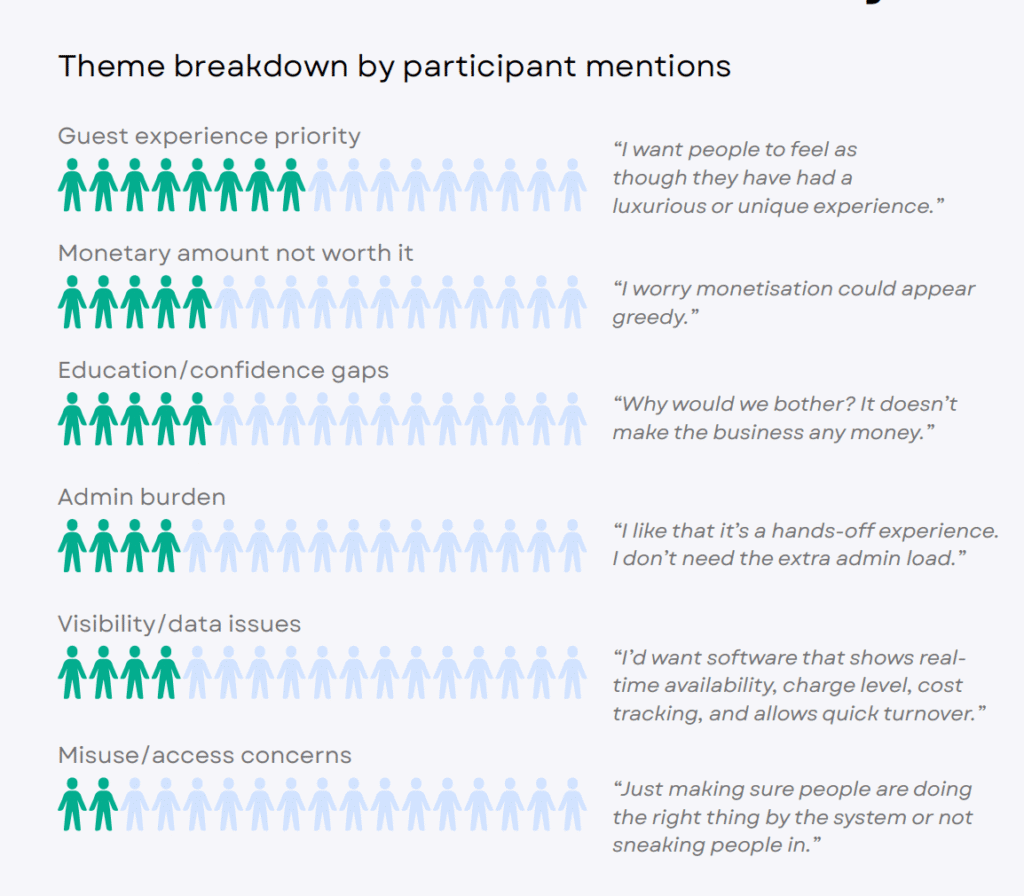
Working closely with a collaborative research group, we combined our session data, transcripts, and observation notes into a centralised Miro whiteboard. By clustering recurring remarks, we validated that host anxieties weren’t random anomalies; they were heavily shared market patterns.
“I want people to feel as though they have had a luxurious experience… I worry monetisation could appear greedy.”
“I like that it’s a hands-off experience. I don’t need the extra admin load.”
“We can’t incur a $100 bill that we swallow.”
The Three Host Archetypes

Liam (The Forward-Thinker)
Savvy accommodation owner in the Hunter Valley. He uses his chargers to stand out from the competition, but he’s completely flying blind with no real-time earnings stats or simple bookkeeping tools.

Maya (The Busy Host)
High-traffic winery owner who puts hospitality first. She doesn’t have time for spreadsheets and is genuinely worried that charging two cars at once will overwhelm her grid and blow a fuse in her busy restaurant kitchen.

Avery (The Reluctant Host)
Micro-stay owner who treats technology like a necessary evil. She hates talking about money so much that she lets guests charge for free just to avoid an awkward conversation.
Stage 3: The Design Strategy
The Busy Host User Journey
We mapped the journey across five distinct operational phases. This tool proved that a user’s emotional confidence drops sharply right after setup until a painful environmental trigger forces them to find a solution.
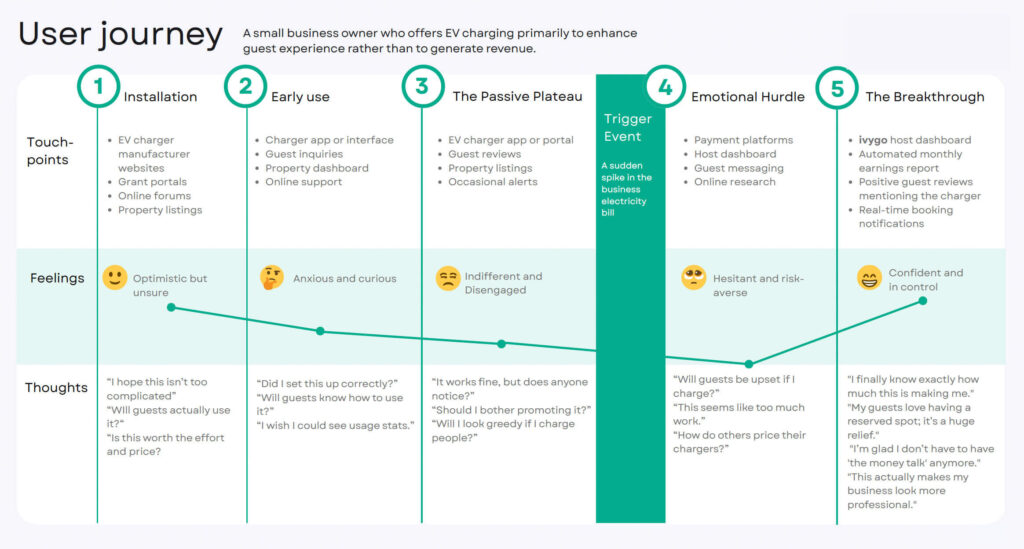
| Phase | 1. Installation | 2. Early Use | 3. The Passive Plateau | 4. The Trigger Event | 5. The Breakthrough |
| Feelings | 😐 Optimistic but unsure | 🤨 Anxious and curious | 😑 Indifferent and disengaged | 😰 Hesitant and risk-averse | 🤩 Confident and in control |
| Thoughts | “I hope this setup isn’t too hard.” | “Did I hook this up right?” | “It works, but is anyone using it?” | “Look at this massive electricity bill!” | “I know exactly what I’m earning.” |
| Pain Point | Zero tech clarity | Missing notifications | Giving power away for free | Volatile energy cost spikes | Occasional pricing tweaks |
Deep Dive: Turning Complexity into Simplicity
To pull users out of the plateau, the updated ivygo product strategy addresses their three core hidden fears through automated interface actions:
1. The Real-Time Command Center
Instead of making hosts guess if a charger is running or online, designing a centralised screen that visualises critical metrics instantly.
- Live Earnings Tracker: Simple high-contrast cards showing today’s, this week’s, and this month’s cash intake.
- Heartbeat Indicator: A prominent green status dot indicating that the station’s physical hardware is perfectly synced and error-free.
2. The Payback Visualiser
Most small businesses leave money on the table because they don’t know how to project return on investment (ROI). The onboarding interface features an interactive timeline picker that lets hosts input their initial hardware setup costs and automatically balances them against tourism metrics to show a clear 12-to-24-month break-even path.
3. Invisible Grid Intelligence
To completely shield hosts from property risks, I proposed to build an adaptive power settings control directly into system controls:
- Kitchen Failsafe (Smart Power Sharing): The system seamlessly throttles vehicle power draw if it senses the main building’s structural load is nearing capacity, saving Hosts from tripped circuit breakers.
- Bill Shield (Peak Protection): Automatically slows or pauses an active charging session if local grid costs surge dramatically, ensuring the business never spends more on power than the customer is paying.
B2B Strategy: Integrating Charger Management into Daily Workflows
Based on the daily work patterns and challenges shared by the hosts, it became clear that business clients need a dedicated solution tailored just for them. Providing a responsive, web-based dashboard allows hosts to manage their EV chargers seamlessly alongside the other software tools they already use to run their properties every day.
Stage 4: The Release Roadmap
To introduce these massive features to tech-hesitant business owners without causing cognitive overload, we mapped a phased 12-month release plan:
Phase 1: Build Confidence
- Goal: Solve the visibility problem right away.
- Deliverables: Core Host Dashboard with live usage metrics, and simplified step-by-step pairing wizards to eliminate setup anxiety.
Phase 2: Remove Friction
(Months 3-6)
- Goal: Fully automate the financial part of the experience so Hosts doesn’t have to face awkward price conversations.
- Deliverables: Automated payment splitting, auto-generated monthly CSV reports for accounting, and the active visual ROI payback graph.
Phase 3: Strategic Growth
(Months 6-12)
- Goal: Maximise energy efficiency and boost host traffic.
- Deliverables: Advanced Smart Power toggles, Solar-First optimisation modes, and download-ready “EV Friendly” digital badging kits for property profiles on Booking.com or Airbnb.
The Strategic Vision
By transforming complex energy data into simple, automated dashboard mechanics, ivygo completely solves the emotional barriers holding independent hosts back. We take a technical cost risk and transition it effortlessly into a passive marketing advantage. This process not only shields property owners from high utility costs but also provides drivers with a network of reliable regional charging destinations they can count on.
Need to elevate your digital project?
Let’s discuss how my design system, accessibility, and product strategy skills can help your team.

Senior Product Designer | Enterprise Systems & Strategy
I bridge complex business logic and intuitive UX. With over a decade of experience across digital health, insurance, and media, I lead cross-functional teams to deliver scalable, accessible, and high-impact digital products.
POINTS TO CONSIDER
Why Choose Me?
Enterprise Design Systems
Architecting and governing scalable component libraries to accelerate development, eliminate design debt, and unify cross-platform products.
Accessibility & Inclusion
Embedding WCAG 2.2 compliance deeply into the product lifecycle as a core design pillar, ensuring digital equality.
Product Strategy & Leadership
Leading agile teams through data-driven heuristics, research, and iterative testing to turn complex ambiguity into market-ready solutions.